Drivers Beside the Wires
Serial and Ethernet drivers run on the gateway, so RS-485 trunks and local networks never need to be exposed.
The edge gateway sits on the equipment network, speaks each protocol natively, and forwards clean data upstream. Collection continues when the uplink does not.
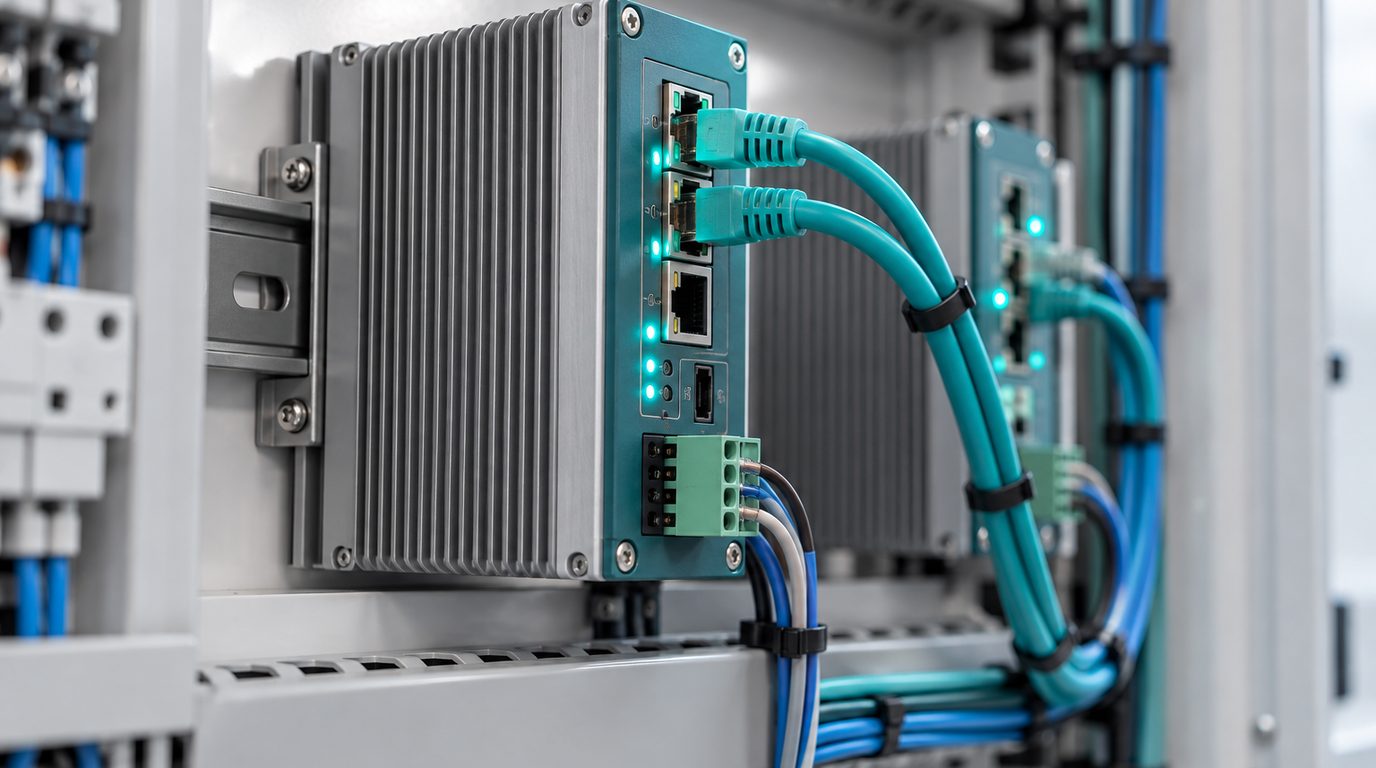
Protocols such as Modbus RTU, BACnet MS/TP and KNX live on local networks, often on RS-485 cabling that cannot leave the building. An edge gateway runs the drivers where the wires are, so only normalized tags travel across the internet.
Serial and Ethernet drivers run on the gateway, so RS-485 trunks and local networks never need to be exposed.
If the uplink drops, readings are held on the gateway and sent in order when the connection returns.
The gateway connects outward to IoTServa, so no inbound ports are opened to the equipment network.
Devices, profiles and polling are managed from IoTServa, not by visiting each site with a laptop.
Run on a DIN-rail gateway or an industrial PC that you already own or buy separately.
Requests are grouped and timed per bus, so slow serial trunks stay responsive.
Yes, for sources that are already reachable over IP, such as an MQTT broker or a LoRaWAN network server. Serial and local-only networks need a gateway on the site.
A small industrial computer or DIN-rail gateway with the right ports, such as RS-485 for serial devices and Ethernet for IP devices.
Tell us which protocols are on site. We will scope a pilot that reads your real devices.